Wednesday, 17 January 2018

Ethics within fashion

TOMS

The brand of TOMS has footwear designed and made specifically to provide ethical vegan shoes that save the environment.

TOMS was founded by Blake Mycoskie in 2006 following a trip to Argentina. During his visit, Mycoskie saw firsthand how people living in impoverished areas of Argentina had to live without shoes, a challenge that many of us likely give little thought. Inspired by his trip, Mycoskie decided to establish his company with giving in mind.
Since 2006, TOMS’ footwear business has donated more than 60 million pairs of shoes to children in need all over the world. The company's eyewear division has given more than 400,000 pairs of glasses to visually impaired people who can't access eye care. TOMS’ mission is so central to the company’s branding, it’s given almost equal emphasis on its website as the products it sells. In fact, it’s almost impossible to navigate through TOMS’ site without seeing further examples of how TOMS helps people around the world. It tries to benefit as many aspects of the environment and people in third-world countries. 

Everlane

All Everlane clothing is tracked while in the making and shows each individual step taken to creating these clothes and how they are work-safe and environmentally friendly with no workers being subdued to labour or underpayment.

Founded in 2010 by Michael Preysman, Everlane is boldly committed to ethical manufacturing. All of Everlane’s garments are made in factories that meet the most stringent quality standards – not only in terms of the clothes themselves, but also in how workers are treated. Everlane only partners with manufacturers that demonstrate a strong commitment to their workers’ welfare, a fact the company prides itself upon in its marketing material.
the company also provides customers with a detailed cost breakdown for each and every one of its stylish, minimalist garments. This includes details on the cost of materials, labor, transportation and logistics, excise taxes and duties, and even hardware such as zippers and buttons.

Fashion Conscience

They create clothes, accessories, gifts and shoes that are all safely made, eco friendly, fairtrade, sustainable, recycled, organic and vegan.

The company feels passionately about tackling the issues of textile landfill in the UK as 1 million tonnes of textiles ending up in landfill every year, so is hugely important to them to reduce this waste to keep a more eco-friendly approach.

Q&A: How do I know the designers and manufacturers are ethical? 
We work on an understanding of transparency of our designers' manufacturing process. We know that all of our designers are working to make their collections as ethical as possible, many already use internationally recognised eco, fair trade and organic fabrics and fair trade processes or are striving to get official recognition. In some cases it can take several years to get international ethical or fair trade accreditation but we recognise their actions now.

People Tree


People Tree purchases the majority of its Fair Trade products from marginalized producer groups in the developing world and guarantee most of our purchasing is committed to the World Fair Trade Organization and Fair Trade standards. Their priority is to support producer partners’ efforts towards economic independence and control over their local environment and community. They use natural resources throughout our production to promote environmentally responsible initiatives for a sustainable future.


Monday, 15 January 2018

Marketing Fashion Posters

H&M Billboard Posters:

These H&M billboard posters always contain the logo in the bottom right hand corner in the colour red which contrasts and stands out from the main image colour. In their billboard advertisement they usually have more than one model to show the different clothing range that they provide. They also include the prices on the clothing so that people are more likely to buy such clothes because it is fairly cheap and looks pretty/smart/comfortable. They also use models of famous people such as David Beckham to promote the brand so that people who look up to him and aspire to be like him would want to wear the same clothes as him. 

Topshop Billboard Posters:


Topshop/topman uses mostly the same layout of separating the female models from the males with the logo in the centre. 

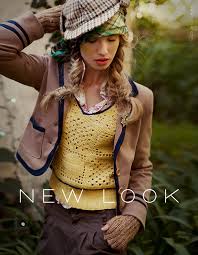
New Look posters:
Others:


Eco friendly fashion


Friday, 12 January 2018

Pre Production Research Advertising (Fairtrade)

Fairtrade 

Fairtade helps to promote the work done by the lives of the people who grow the things we love to make a difference. We do this by changing the way trade works through better prices, decent working conditions and a fair deal for farmers and workers in developing countries. Companies choose to work in partnership with the organisation as it promotes that company for helping out those who aren't recognised but play a big part in the production. Therefore people are more likely to buy the product because it helps those in other countries who produce the goods.


Here fairtrade uses intertextuality through a reference to Nike with the phase 'Just Do It' to signify that fairtrade banana's are just as important in sport as Nike products are due to the vitamins and nutrients which banana's contain as a healthy source of energy. The replacement of 'Just Do It' with 'Just Do Eat' influences those who see it to become intrigued due to it being an order so people question 'why should I' and read up on the product so that more people become aware of fairtrade. How the banana is placed here also represents the logo of Nike which is a tick reinforcing the intertextuality so people recognise it and want to purchase products with the fairtrade logo.


In this advertisement, Cadbury is the main brand using fairtrade, showing how the company helps to influence the supply of cocoa sold from Ghana, helping provide those farmers and workers with  happier paid lives and producing more cocoa used to make chocolate. This partnership benefits both Cadbury's and the producers of cocoa as they both get more credit which overall helps promote both brands.


This advertisement for KitKat shows the influence on farmers due to the advertisement of fair trade through it's very own Nestle Cocoa Plan which has helped introduce the fair trade logo onto its brand of two and four finger KitKat bars. It states in the flow diagram that in 2013 over 1 billion KitKat's will have the fair trade logo so it spreads and helps become well known, therefore benefits the farmers in other counties with a better living. The plan also gave 62,000 new cocoa trees to the Kavokiva co-operative as well as being given £1.6 million in fairtrade premiums paid to 2,500 farmers in the Ivory Coast.


This Starbucks advertisement shows that Starbucks has now been certified for fairtrade to be advertised within it's brand which therefore, makes it seem like a more trustworthy company as they are helping to benefit those in other countries who grow and sell coffee beans; to provide them with more recognition alongside the brand. It states that now 100% of the espresso beans that they use are fairtrade certified which means that by customers purchasing a Starbucks, they will benefit the producers of the coffee. That way the farmers get recognition and Starbucks receives more income.


This advertisement for Ben & Jerry's shows an artistically creative insight to the cause of co-operating with the fairtrade brand as it uses the inside of the ice cream tub to portray how the cocoa used in the ice cream produced. The fine print states that Ben & Jerry's now use fairtrade which is helping those in the Dominican Republic, ensuring farmers a fair wage to help their families, community and environment. It uses certified cocoa and vanilla in its products  to create 'the best possible ice cream in the best way possible'.


Thursday, 7 December 2017

Explain how the political context in which newspapers are produced, influences the ownership and regulation.

Ownership and Regulation: The Daily Mail and The Guardian

Explain the political significance of the concept of 'press freedom' and its relationship to representative democracy. Why do you think freedom of the press is important? How much influence do you think the government should have about the things reported in the UK press?


The freedom of the press is important as it creates news stories that can be published without major problems with what coverage or content it includes; although, the government should have a limited control over this as some stories pubished by the press can be offensive or personal to people, therefore may result to legal action, so newspaper freesom of the press should be monitised and carefully covered so that the company does not get into trouble like the News of The World. It would benefit the public if the press was controlled to an extent but are still allowed to post whatever content coverage is suitable for each paper to help create a wider target audience for the company. It is also ensured that the government have a slight influence on this freedom as the need for regulation needs to be at a minimum so that rich upper classes can be stopped from owning too much power over the other classes. 
The free press has both positives and negatives and therefore shouldn't be totally self regulated the invasion of privacy of those in the public eye is becoming more common. Which reporters taking stories to far and gaining private information this is happening due to the demand that the audience and readers give, responding well to stories that seem more exclusive. When a coverage isn't in the public's interest then it should be required  as reporters for newspapers are gaining both unwanted information and information which is to invasive.

How are newspapers regulated and why do you think this is necessary? Can you refer to an academic idea we have studied in class?

The main organisations that regulate newspapers consist of: Editor's code of practice, Press Complaints Commission (PCC), and the Independent Press Standards Organisation (IPSO). This is necessary so that newspaper companies are protected by these organisations so that stories are checked to make sure there is no obligation to those stories which could harm the company involved if there was a problem with story coverage.
Curran and seaton argue that ownership and regulation is the most significant factors in how the media operates. This contributes to the media not having a broad range of opinions and perspectives as companies such as News UK own multiple news outlets which leads to the same opinion coming from the same person being put out into the media, this comes from a capitalist structure, newspapers such as the guardian are ran by trust boards and not by one person so their news comes form a wider perspective and has less bias.


What examples of editorialised content would not fit 'impartial' television news (e.g. social or political opinion) from The Guardian and The Daily Mail print or online editions.


Editorialised content means that its not advertising based in the act that they pursue direct sales intentions. This is the reason in which customers purchase or subscribe to these news outlets. News outlets of this type manipulate and distorts news values in order to broadcast impartial judgments of peoples beliefs and what they want to hear.

What examples of ownership models, e.g. The Guardian’s trust ownership and The Daily Mail’s proprietor model, could show the opportunities offered by the latter model for control by ‘press barons’.

Ownership models like the Daily mail’s proprietor model offer a prime example of how media can be controlled to influence public political views. Press barons like Rupert Murdoch, who controls most UK tabloids, can be seen to share his political opinions in each of his newspapers; this allows for an unfair opinion to be shared with the UK.

How much power does the press have to shape political debate, e.g. the influence of proprietors on politicians to support policies promoting cross-media ownership or holding back from regulation.

The press can develop power through ownership of newspapers which consequently can shape political stances due to their ideologies and therefore political debate through the widespread circulation which has the power to influence politicians in their debates. The owners of newspapers can influence the editorial stance of a newspaper. Newspapers will also attempt to influence how the public vote in elections. It is important that newspapers stick to a code of conduct or rules set out by independent organisations in order to avoid this. If one large business or one singular man owns a company their ideologies can filter down into the papers. This relates to Hesmondhalgh's theory on cultural industries as DMGT (owner of the Daily Mail) also owns multiple other companies. This therefore shows the integration and conglomeration of cultural industries which follows the normal capitalist patterns seen in Hesmondhalgh's theory. The newspapers can create a pressure towards political groups through this as their stories can be critical of certain elements (for example The Sun criticises Brexit however The Daily Mail avoids the stories on it due to their ideologies). This therefore puts pressure on the Government to change as the papers are so widely broadcasted the negativity has to be controlled to ensure political stability, hence why typically the Government and the press have a symbiotic relationship.

Explain the political affiliations of the two newspapers, e.g. The Daily Mail as a right wing newspaper is partly defined by its support for the Conservative party, The Guardian as a centre-left newspaper is partly defined by its support for Labour or the Liberal Democrats, and how this is clear from an example you have studied.

To begin with, the daily mail is a clear right wing(capitalist) newspaper, which evidently portrays these views through its conservative stories and layout.The daily mail always tends to have a focus on money and prices in modern life- even when not especially relevant to the story. The mail does this because of its political affiliation, due to the wealthy being interested in the price of things. Another point, is that the mail favours right wing people and the wealthy, which is clearly shown in their bias to some stories. An example of this, was the paradise papers coverage, which involved the queen being under fire for not paying taxes and also for the elites dodging tax. In this, the mail back up the queen and made it as if those lesser off were wrong and the queen was simply a victim. In contrast to the mail, we see the guardian adopts the left wing (socialist) ideologies because of its support for labour . The guardian is very much a hard newspaper and so what it conveys tends to be less biased and more factual. Despite this though, there is a slight lean in what it has written towards the socialist side of things and so the rich tend to look worse. Interestingly, the guardian also says a lot about tax at the minute, though what it says is how rich rich should really help the poor and so they should be taxed a greater amount.

Daily Mail cover: Doesn't support the migrants coming over from foreign countries to Britain. 

The Guardian: supporting the migrant ordeal saying that they benefit the UK through money.


Monday, 4 December 2017

Ok Go: Representation in Music Video *

Ok Go:

Here it goes again:
End Love:
Obsession:

How are Ok Go representing themselves?

Ok Go represent themselves as creative and unique in comparison to other artists as the viewing pleasure is enticing to viewers in comparison to attracting an audience with the music style. They find creative ways of staging their music videos so that it is pleasing for the viewers eye as their videos consist of a main feature that differentiates from all other mainstream music videos, for example, in 'Here it Goes Again' treadmills are used and in 'Obsession' printers are used. Each of the members build their own identities through clothing and appearance in their videos.


What Media Language is present in all three music videos giving them a unique identity? Think about the similarities between each video.


Why do you think they have adopted this representation?

Monday, 27 November 2017

Unseen Advertisement

Amnesty International Advertisement:


Analyse how the creators of this advertisement have created meaning through the use of Media Language in this source by comparing it to the Shelter advertising campaign.

The connotations of this advertisement imply the idea of human freedom for human rights as the hand gesture means that of peace as well as the double meaning behind the hand as it can also be seen as that of scissors cutting through the barbed wire to reinforce the idea of freedom but can also show the danger and blood shed through the government's restriction of human rights. This symbolises what Amnesty stands for as an international non-governmental human rights organisation. The contrast of colour with the red, cream and black shows the simplicity of the advertisement and could connotate the idea of red symbolising passion for freedom. The simplicity of the layout implies that all the big problems concerning human rights can be solved through through such simple actions. The word international is highlighted in the colour red to emphasise that Amnesty is there to help all people no matter what. The logo is located in the bottom right hand corner so that people will recognise it and associate it with human rights and freedom.

Wednesday, 22 November 2017

Analysing Shelter's Advertisements

Shelter Adverts

  • How have they used their actors in their images and how have they directed their facial expression?
They have used actors to portray an emotional connection with the audience through facial expression as they all look upset as their eyes look pleading and sad as well as their lips parted slightly as if they are almost lifeless to create a slightly distressing impact on viewers so that they feel the need to help the cause because of the emotional connection they have created with these images. The actors are also different in race and gender which could infer that anyone can become homeless. They also look neutral which could infer that they are shown as a passive member of society and are only there to serve the needs of anyone above them.
  • How have they been lit?
A front light is used to light up their facial features to emphasise the passive expression and pain that the actors are trying to portray. There is faded black around the edges of their faces which could infer that these people who have no homes feel like they are surrounded by darkness and there is no escape. The lighting could infer how the organisation is trying to shine a light on these types of people to try and get them help, finally putting these lesser known people in the spotlight.
  • How has Shelter used layout to convey their message?
The text covers the faces of the 'homeless' people, inferring that they are trapped behind other things that are more important so are forgotten. The placing of the faces which take up majority of the advertisement could convey that homelessness is a big problem, but also creating more of an appeal to the viewers as it is eye-catching. The layout is relatively the same for each advertisement with the same website address and Shelter logo at the bottom as well as a message in a red box to search for 'Shelter housing advice' and different phrases above the box in white corresponding with the person. For example, the man in the middle
  • How has the use of font contributed to the message?
The font is bold and coloured red which could show that this cause is extremely important and urgent for help. The fact that the text is situated over the faces creates the idea that these people's thoughts are consuming them as that is all they can think about. Each text is unique which shows that they all have different views as to what they want, creating more realism, developing an idea of what the homeless actually feel about their situations. 
  • How has the audience been communicated with? What do the messages mean?
The audience is communicated through the colour scheme and text as the contrasting colours of red and black stand out as well as the bold unique text on each of the advertisements. The bright red connotates emotion as well as encouraging action for those who see it, encouraging them to try and become part of Shelter's cause.